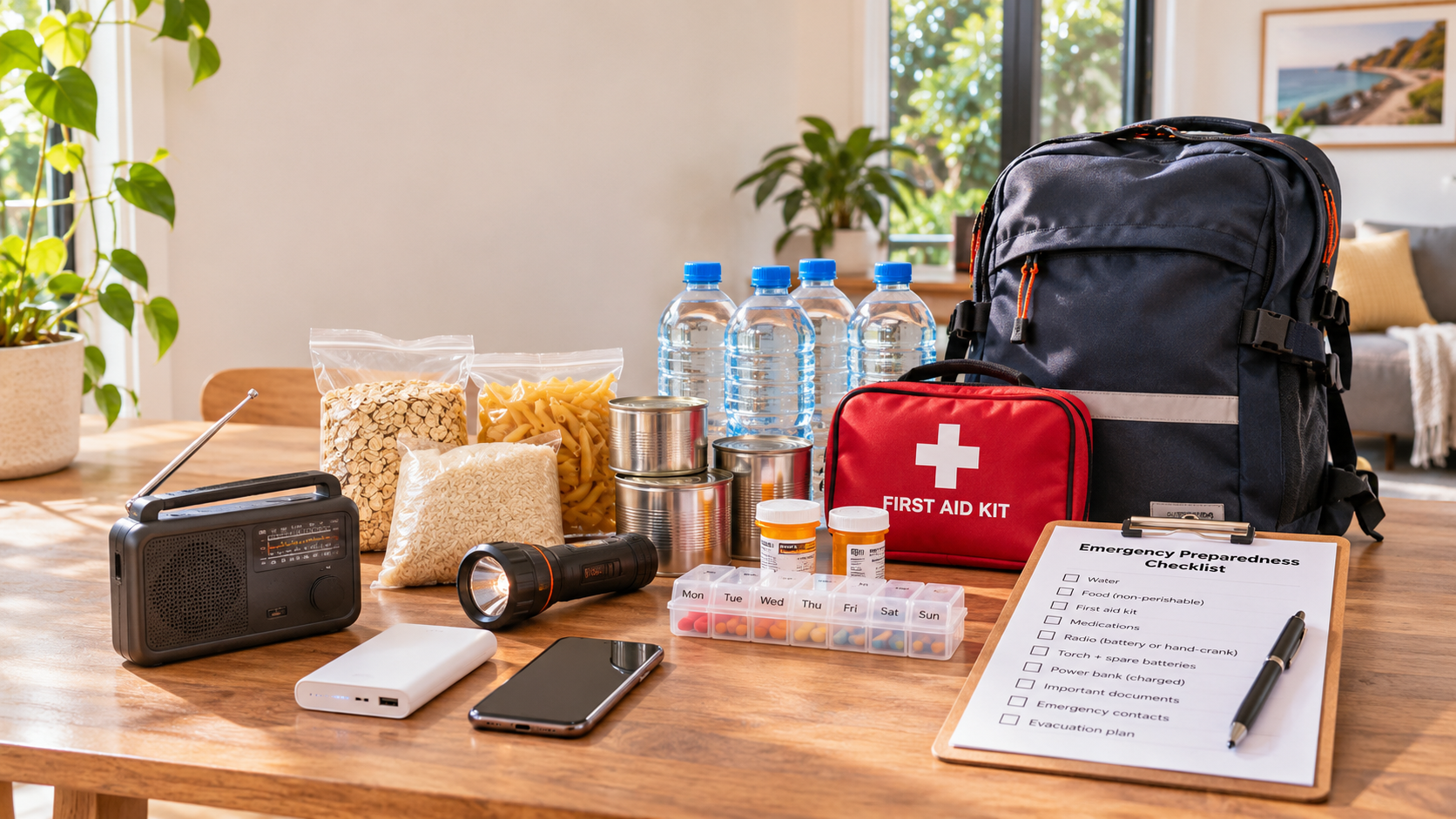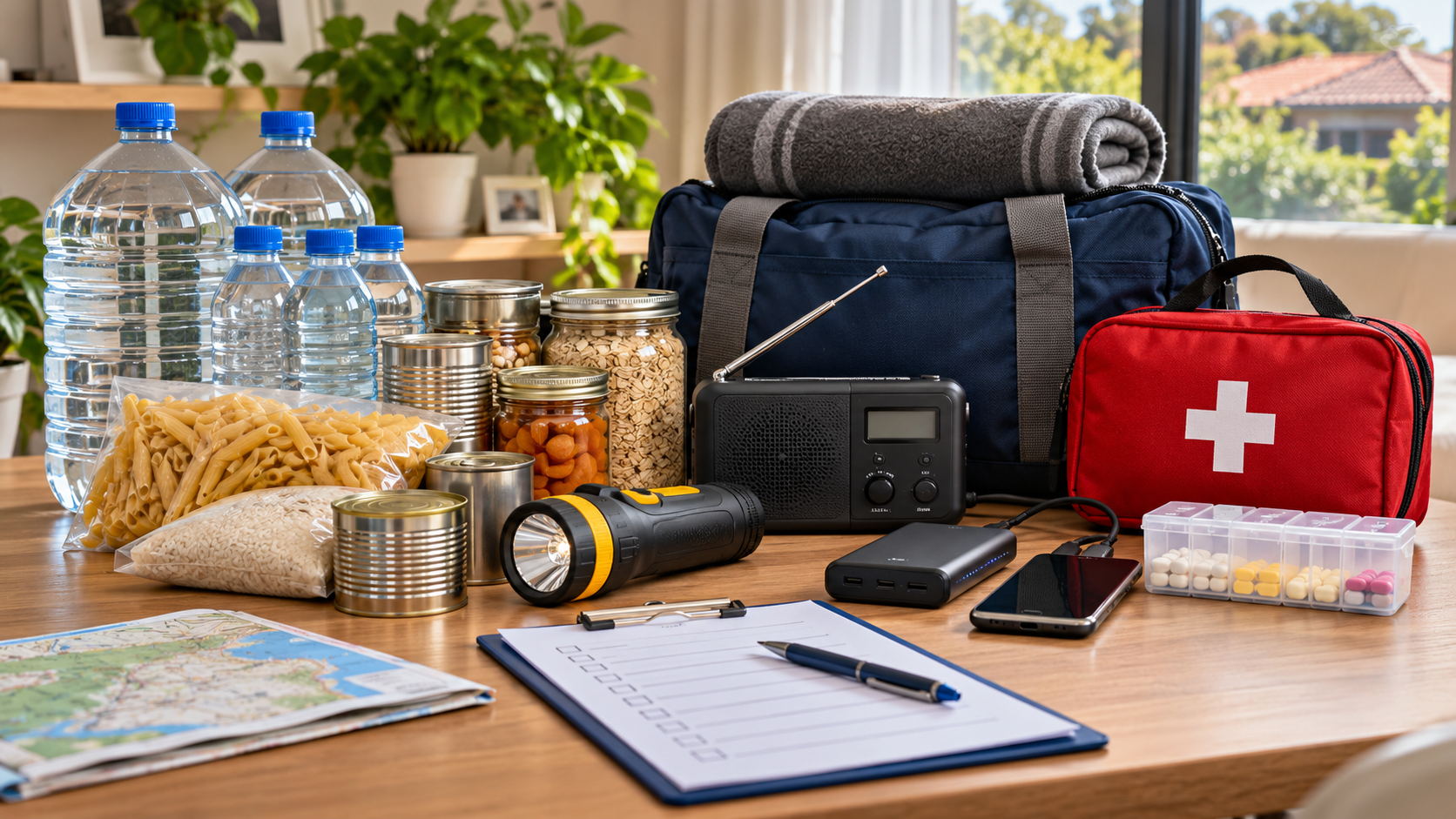
Why Every Australian Household Should Prepare for Seven Days
Malak Foundation | Community Preparedness and Resilience
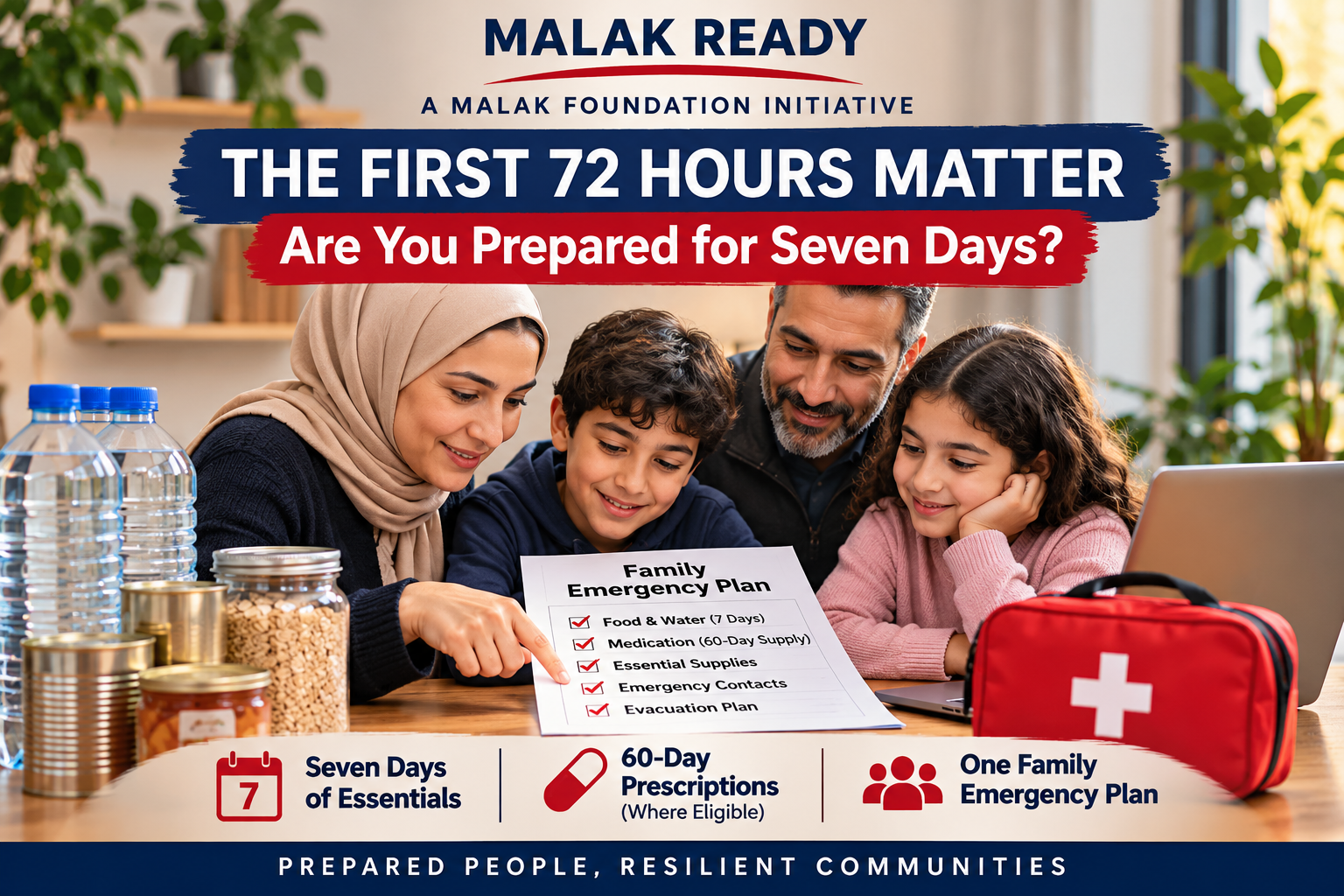
Seven days of essential supplies. Sixty-day prescriptions where eligible. One family emergency plan.
Imagine waking up tomorrow to discover that the electricity has stopped working. Your mobile phone cannot connect to the network, electronic payments are unavailable, and your local supermarket cannot open.
You check your kitchen and realise there is enough food for only another day. Your phone battery is running low, and someone in your household has just a few days of essential medication remaining.
What would you do?
How long could your family manage without visiting Coles, Woolworths, a pharmacy or another local store?
For many Australian households, the answer may be less reassuring than they expect.
We live in an interconnected world where electricity, telecommunications, transport, banking, healthcare and food supply systems are essential to everyday life. These systems are generally reliable, but even a temporary disruption can create significant difficulties.
At a time when the world is experiencing growing geopolitical tensions, armed conflicts, cyber threats, severe weather events and economic uncertainty, household preparedness deserves greater attention.
Governments around the world are increasingly encouraging their populations to prepare for emergencies and disruptions to essential services.
Malak Foundation is calling on every Australian household to take practical steps towards maintaining at least seven days of essential supplies and developing a clear family emergency plan.
This is not a prediction of an imminent crisis. It is a call for greater personal responsibility, community resilience and sensible preparation.
1. A Global Message: Governments Are Asking Households to Prepare
Emergency preparedness is becoming an important part of national resilience strategies around the world.
While governments continue to invest in emergency services, infrastructure and public safety, many are also recognising that households have an important role in their own preparedness.
Several countries have already introduced clear recommendations.
Sweden — At least seven days
Sweden encourages residents to prepare for at least one week without normal access to essential services. Its public preparedness guidance addresses disruptions to electricity, water, food supplies, communications and heating, alongside the possibility of major crises or conflict.
Norway — One week of household self-preparedness
In May 2024, Norway extended its recommended period of household preparedness from three days to one week. Its guidance recognises that during a widespread emergency, authorities may need to prioritise people who are unable to manage independently.
Germany — Work towards ten days
Germany's Federal Office of Civil Protection and Disaster Assistance encourages households to aim for ten days of food and essential supplies, while recognising that even three days of preparation is a valuable starting point.
Finland — At least 72 hours
Finland's national preparedness guidance encourages households to be able to manage independently for at least three days during disruptions to normal services.
European Union — A minimum of 72 hours
In March 2025, the European Commission introduced its Preparedness Union Strategy, including an objective to develop guidance supporting at least 72 hours of population self-sufficiency.
These countries face different circumstances, but their guidance shares a common principle:
Households should be prepared to manage basic needs for a period of time without relying on immediate access to shops, utilities or outside assistance.
Australia has its own emergency preparedness guidance, including the Australian Red Cross RediPlan and resources provided by state and territory emergency authorities.
Malak Foundation believes that adopting a seven-day household preparedness target is a sensible additional measure for Australian communities.
2. The First 72 Hours: Why Early Preparation Matters
The first 72 hours following a major disruption deserve particular attention.
Consider what might happen during an extended electricity outage, widespread flooding, a severe storm or an interruption to telecommunications and payment systems.
Supermarkets may be unable to operate normally. Refrigeration systems can stop working. Fuel stations may experience disruptions. Roads and transport networks may become inaccessible, and online banking or electronic payments may be temporarily unavailable.
A family that normally shops every two or three days could quickly discover that it has insufficient supplies.
Many households may attempt to purchase essential items at the same time, potentially creating crowded stores and temporary shortages.
We have witnessed how quickly purchasing behaviour can change during periods of uncertainty.
However, this is precisely why Malak Foundation encourages people to prepare gradually and responsibly, rather than rushing to supermarkets when a crisis occurs.
If households already have essential supplies at home, they are better positioned to remain safe, follow emergency warnings and make informed decisions.
They are also less likely to place additional pressure on local retailers, community organisations and emergency services.
During a large-scale emergency, assistance may not reach every household immediately, particularly where transport or communications are disrupted.
The first 72 hours should be spent protecting yourself and your family, not searching desperately for necessities that could have been prepared in advance.
Being prepared does not guarantee that an emergency will be easy. It gives households more options, reduces avoidable risks and provides valuable time to respond.
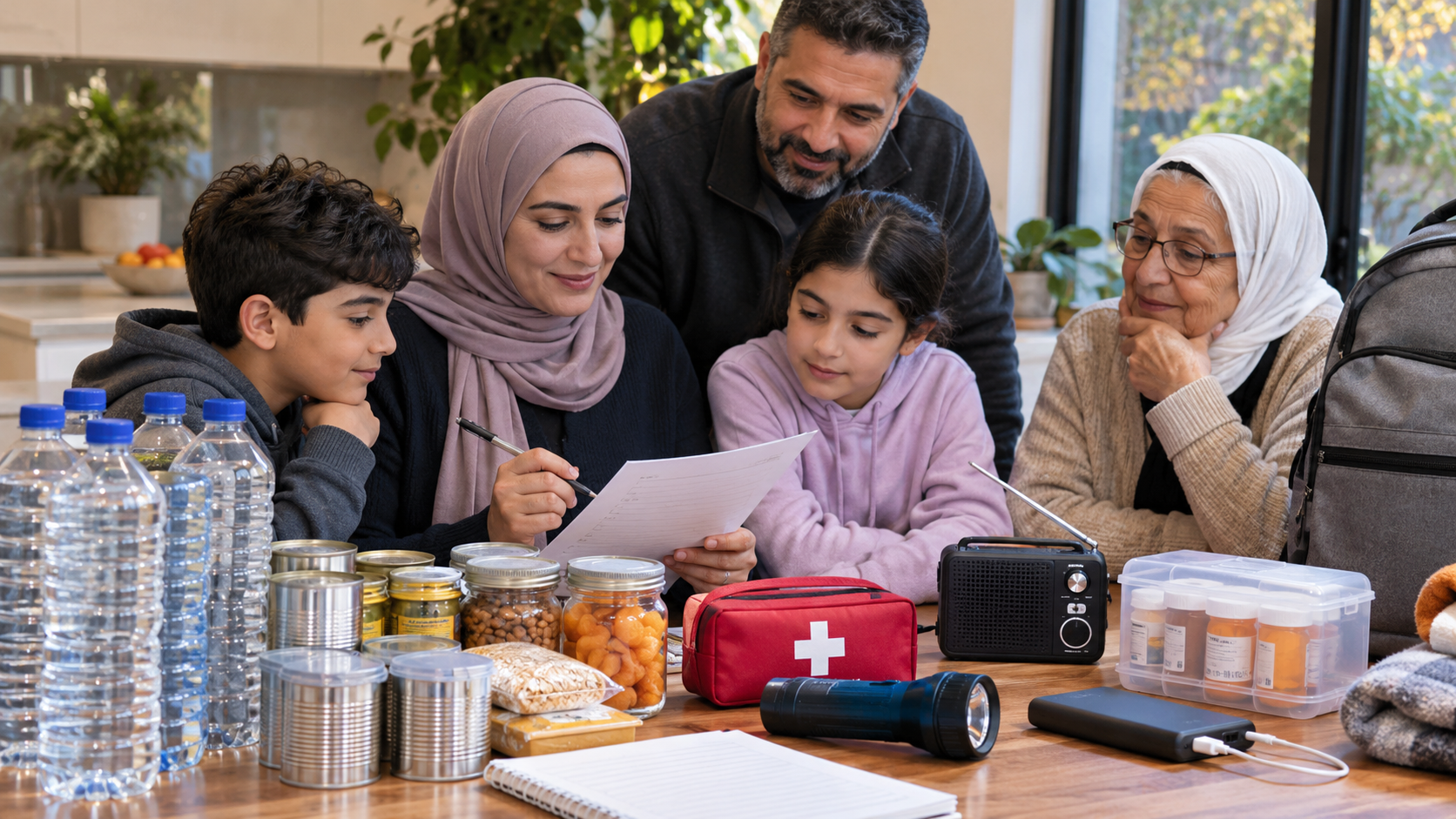
3. Seven Days of Essential Supplies: What Every Household Needs
Malak Foundation recommends that Australian households progressively build a seven-day reserve of essential supplies.
This does not mean purchasing excessive amounts of food or creating an expensive emergency stockpile.
It means maintaining a practical reserve of items that your household already uses and needs.
Drinking water
Clean drinking water is one of the most important emergency supplies.
As a practical planning target, NSW Health recommends three litres of bottled water per person per day in its emergency pantry guidance.
For seven days, that means:
One person: 21 litres.
Two people: 42 litres.
A family of four: 84 litres.
A family of six: 126 litres.
These quantities are intended for drinking and basic food preparation. Additional water may be needed for hygiene, medical needs, hot weather, pets and other circumstances.
Water should be stored safely in suitable containers, and households should know what to do if tap water becomes unsafe.
Food that does not depend on electricity
Choose foods that are safe to store without refrigeration and, where possible, can be eaten without heating.
Suitable examples include canned beans, vegetables, fish, soups, ready-to-eat meals, oats, crackers, dried fruit, nuts, long-life milk and other familiar household staples.
When selecting food, consider:
The number of adults and children in the household.
Allergies and medical dietary needs.
Cultural and religious dietary requirements.
Foods suitable for babies and young children.
Whether preparation requires electricity, gas or additional water.
Storage conditions and expiry dates.
There is no need to purchase everything in a single shopping trip.
A more affordable approach is to buy a few additional non-perishable items during normal grocery shopping and rotate them regularly into everyday meals.
The goal is to have seven days of usable food, not a cupboard full of items your family will never eat.
Lighting, power and communication
Every household should consider maintaining a working torch, spare batteries, charged power banks, charging cables and a battery-operated or hand-crank radio.
A mobile phone is an essential communication tool, but it should not be the only method of receiving emergency information.
Households should also maintain a printed list of important contacts, including family members, doctors, pharmacies, schools and local emergency services.
Hygiene, health and personal essentials
Emergency preparation should include first-aid supplies, soap, hand sanitiser, toilet paper, personal hygiene products and rubbish bags.
Families should also consider nappies, baby formula, pet food and any equipment required by household members with disabilities or additional care needs.
Cash and important documents
Electronic payments may not be available during some disruptions.
Where financially possible, keeping a modest amount of cash in small denominations can provide an additional payment option.
Households should also maintain secure copies of important documents, including identification, insurance records, medical information and emergency contacts.
4. An Overlooked Risk: Running Out of Essential Medication
One of the most important areas of household emergency preparedness is also one of the least discussed: prescription medication.
For someone living with diabetes, heart disease, epilepsy, asthma, high blood pressure or another ongoing medical condition, uninterrupted access to medication may be essential to their health and safety.
Imagine a person who depends on daily medication but has only two tablets remaining when a major disruption begins.
A closed pharmacy, interrupted transport network or inability to contact a doctor could quickly become a serious problem.
This risk can often be reduced through advance planning.
Did you know that many Australians can receive 60-day prescriptions?
Under Australia's Pharmaceutical Benefits Scheme (PBS), eligible patients with stable, ongoing medical conditions can receive a 60-day supply of certain prescribed medicines in a single dispensing, instead of the traditional 30-day quantity.
This arrangement can reduce the number of visits to pharmacies and may lower medication costs.
However, many people may not know that this option exists.
Malak Foundation encourages people who take regular medication to ask their doctor or pharmacist whether 60-day dispensing is available and clinically appropriate for them.
Eligibility depends on the medicine, the patient's circumstances and the prescriber's assessment. A new prescription authorising the larger quantity is generally needed.
Importantly, receiving a 60-day prescription does not automatically mean having 60 days of medication in reserve.
It provides a longer dispensing period and an opportunity to manage medication supplies more effectively.
Our medication preparedness recommendation
Malak Foundation encourages households to discuss the following with their healthcare professionals:
Whether eligible medications can be supplied through 60-day dispensing.
How much medication should reasonably be kept available for emergency circumstances.
When prescriptions should be renewed to avoid running out.
How to protect medications requiring refrigeration or specific storage conditions.
Whether a written medication list and copies of prescriptions should be kept in an emergency kit.
For some people, maintaining additional medication is appropriate. For others, larger supplies may not be safe or permitted, particularly where medicines require regular monitoring, dose adjustments or special controls.
No one should change prescribed doses, share medication or accumulate supplies without appropriate professional advice.
People who depend on electrically powered medical equipment should also have a specific backup plan developed with their healthcare provider.
Do not wait until you are down to your final dose to think about what would happen if your pharmacy became inaccessible.
A simple conversation with your doctor or pharmacist today could prevent a serious problem tomorrow.
For further information, visit the Australian Government's 60-day prescriptions information page.
5. Supermarkets Are Essential, but They Should Not Be Your Emergency Plan
Australians benefit from a well-established supermarket network, including Coles, Woolworths, Aldi, IGA and independent grocery stores.
These businesses are important parts of the national food supply system.
However, no retailer can guarantee uninterrupted access to food and household essentials during every emergency.
Supermarkets depend on electricity, transport, distribution centres, employees, payment systems and communications infrastructure.
Disruptions to any of these systems can affect opening hours, deliveries, product availability or the ability to process purchases.
The problem is not simply whether food exists in the country. It is whether households can access the products they need, when they need them.
During a significant emergency, thousands of people may attempt to purchase supplies at once.
Those who have prepared in advance may be able to avoid unnecessary trips and reduce demand on already disrupted services.
Preparedness means purchasing responsibly before an emergency, not buying excessively during one.
Malak Foundation recommends that families gradually build their household reserves through normal shopping at Coles, Woolworths, Aldi, IGA, independent grocers or other accessible retailers.
This should be an ongoing habit rather than a one-time shopping exercise.
We also encourage supermarkets, pharmacies and other businesses to promote household preparedness and help communities understand how to plan responsibly.
6. What If Electricity, Water or Communications Stop Working?
Food supplies are only one part of emergency preparedness.
A household should also consider how it would function if several essential services stopped working at the same time.
Electricity
A prolonged outage may affect refrigeration, cooking, lighting, heating, cooling, internet access and medical equipment.
Households should plan how to maintain essential needs safely.
Generators, outdoor barbecues and camping stoves must never be operated indoors or in enclosed spaces because of carbon monoxide poisoning and other serious risks.
Water
An interruption to mains water or a contamination warning may affect drinking, cooking, cleaning and sanitation.
Households should store suitable water supplies and follow official advice about whether tap water is safe.
Communications
Mobile networks, internet connections and telephone services may be affected by power failures or infrastructure damage.
Keep emergency numbers in writing, maintain a radio where possible and agree on a family communication plan.
Transport
Road closures, flooding, fuel shortages or interruptions to public transport may limit movement.
Know alternative routes, identify safe meeting places and understand when it is safer to remain at home or evacuate.
Medical needs
People relying on refrigerated medication, oxygen, dialysis, mobility equipment or other ongoing treatment should seek individual preparedness guidance from their medical team.
These needs may require arrangements beyond an ordinary household emergency kit.
7. Knowing When to Stay and When to Leave
Having seven days of supplies does not mean every household should remain at home during an emergency.
In some circumstances, staying home may be the safest option. In others, particularly during bushfires, floods or other immediate threats, evacuation may be necessary.
Every household should therefore have two complementary arrangements.
A home preparedness reserve: Essential supplies to support the household during disruptions when remaining at home is safe.
A portable emergency kit: Important medication, documents, water, essential clothing, communication equipment and other necessities that can be collected quickly if evacuation is required.
Official emergency warnings and evacuation instructions must always take priority over a household's decision to remain at home.
8. Preparedness Must Include Everyone
Not every Australian household has the same resources, income, health circumstances or support network.
For some families, building seven days of supplies may be straightforward. For others, even purchasing a few extra grocery items can be financially difficult.
Preparedness should not become another source of pressure or exclusion.
People can begin with what they can afford.
Three days of basic supplies is better than none. A working emergency plan is better than uncertainty. Knowing where to seek reliable information is valuable even when storage space or money is limited.
Neighbours, relatives and community organisations can also play important roles in supporting people who may have difficulty preparing independently.
Multicultural communities may face additional challenges, including language barriers, unfamiliarity with Australian emergency warning systems and limited access to accessible information.
Newly arrived residents may not know which number to call during a flood, how to receive a bushfire warning, or where to access official government advice.
Older people, people with disabilities and those living alone may require additional planning or assistance.
At Malak Foundation, we believe that emergency preparedness must be inclusive, culturally accessible and practical for people from every background.
No one should be left without essential information because of the language they speak, their income, their age or their personal circumstances.
9. Introducing Malak Ready: Prepared People, Resilient Communities
To strengthen awareness and encourage practical household action, Malak Foundation is proposing Malak Ready, a community preparedness and resilience initiative.
The initiative will promote a simple preparedness framework:
Seven days of essential supplies.
Encouraging households to maintain sufficient food, drinking water and other necessities to manage temporary interruptions to essential services.
Special attention to the first 72 hours.
Helping people understand how to manage the immediate period following a disruption, including communication, medication, food, water and family safety.
Medication continuity and 60-day prescription awareness.
Encouraging eligible Australians to explore 60-day dispensing and develop appropriate medication arrangements with their healthcare professionals.
One household emergency plan.
Helping families identify local risks, emergency contacts, important documents, safe meeting places and evacuation arrangements.
Accessible and inclusive preparedness.
Supporting multicultural communities through clear information, community education and culturally appropriate engagement.
Malak Ready is intended to complement established emergency preparedness resources, not replace emergency services or the advice of government authorities.
We encourage households to explore the Australian Red Cross RediPlan, a free resource that helps people prepare for emergencies, organise essential information and develop practical household plans.
Through Malak Ready, Malak Foundation also proposes to develop supporting materials, including a seven-day household checklist, shopping and storage guidance, emergency contact directories, and resources for family communication and preparedness.
These resources will help turn general awareness into practical household action.
10. Our Call to Action: Take the Seven-Day Preparedness Challenge
Malak Foundation invites every household to take a simple challenge.
Today — Begin the conversation.
Ask yourself and your family: If we could not visit a supermarket, pharmacy or petrol station for three days, would we have what we need?
Check your current supplies. Identify the most important gaps.
Within the next 72 hours — Establish your immediate essentials.
Organise a basic supply of drinking water, non-perishable food, essential medication, torches, communication equipment and important contacts.
Review local emergency risks and official warning systems.
Within seven days — Complete your household emergency plan.
Discuss how your family would communicate, where you would meet if separated, who may need additional assistance and what circumstances would require evacuation.
If you take regular medication, speak with your doctor or pharmacist about refill arrangements and whether 60-day dispensing is appropriate.
Over the following weeks — Build your full seven-day reserve.
Gradually add food, water and household essentials through normal shopping.
Use older items first, replenish what you consume and regularly check your supplies.
Preparedness is not something that should be completed once and forgotten.
It is a habit that becomes part of responsible household management.
11. A Prepared Household Helps Build a Stronger Australia
Emergency preparedness is often described as an individual responsibility.
But its benefits extend far beyond the individual household.
When more families are prepared, fewer people may need urgent assistance for basic necessities during temporary disruptions.
Emergency services and community organisations can then focus more of their attention on those facing immediate danger or requiring specialised assistance.
Prepared households may also be better positioned to check on neighbours, assist relatives and support vulnerable community members.
This is the principle behind stronger community resilience.
The objective is not for every household to become completely self-sufficient in every possible emergency.
It is to reduce avoidable vulnerability and strengthen our collective ability to respond.
Our communities are at their strongest when responsibility is shared, information is accessible and people look after one another.
12. Prepare Today, Not When the Emergency Begins
We cannot know exactly when or where the next major emergency will occur.
It may be a severe weather event, a prolonged power outage, a cyber disruption, a public health emergency or another unexpected situation.
It may affect only a small community or extend across a much larger area.
But we do know that preparation can make a difference.
A few extra essential items purchased gradually, a medication review, a working torch, a written emergency contact list and a family discussion can help prevent uncertainty from becoming a crisis.
The message from governments around the world is becoming increasingly clear: household preparedness matters.
Malak Foundation believes Australia should continue strengthening this culture of readiness through practical action, public education and inclusive community engagement.
We are calling on every Australian household to take responsibility for its basic emergency preparedness, while recognising that some families will need additional support to achieve this goal.
Do not wait until supermarkets are crowded.
Do not wait until your medication is running low.
Do not wait until an emergency warning reminds you that you have no plan.
Start today, build gradually and help others prepare where you can.
Seven days of essentials. The first 72 hours matter. One family emergency plan.
Because preparedness is not about expecting disaster.
It is about protecting what matters most before an emergency happens.
Malak Foundation
Advancing inclusion, community preparedness and resilience.
Malak Ready — Prepared People, Resilient Communities
Official resources and further reading
Australian preparedness
Australian Red Cross — RediPlan and Emergency Preparedness
Victorian Government — VicEmergency
Victoria State Emergency Service — Household Emergency Planning
NSW Health — Emergency Pantry Guidance
Australian Government — 60-Day Prescriptions
International preparedness guidance
Sweden — Government and Civil Defence preparedness guidance
Norway — Directorate for Civil Protection, Self-Preparedness
Germany — Federal Office of Civil Protection and Disaster Assistance
Finland — 72 Hours Household Preparedness
European Commission — EU Preparedness Union Strategy
Important: Malak Ready's seven-day household target is a Malak Foundation recommendation informed by international preparedness guidance, not an Australian Government requirement. Medication supplies must follow clinical advice and applicable prescribing rules. Always follow official warnings, emergency services and evacuation instructions. Malak Foundation does not provide emergency response services.