How could the international community possess so much evidence and still fail to protect those being killed?
Malak Foundation Incorporated | November 2026
There is a question that the international community must confront, not only for the people of Sudan, but for the credibility of the entire international system:
How could the international community possess so much evidence and still fail to protect those being killed?
This question goes beyond the tragedy of El Fasher in Sudan's Darfur region. It challenges the very purpose of the international institutions, conventions and mechanisms established after the Second World War to prevent humanity from repeating its darkest chapters.
We live in an age where satellites can observe military movements, humanitarian organisations can document atrocities, investigators can identify patterns of ethnic persecution, and international institutions can issue warnings long before massacres occur.
Yet, in El Fasher, the world possessed these capabilities, witnessed the warning signs, and still failed to prevent the catastrophe.
The tragedy was not simply that people were killed. It was that their danger was known, their suffering was documented, and the institutions responsible for international peace and security failed to secure their protection.
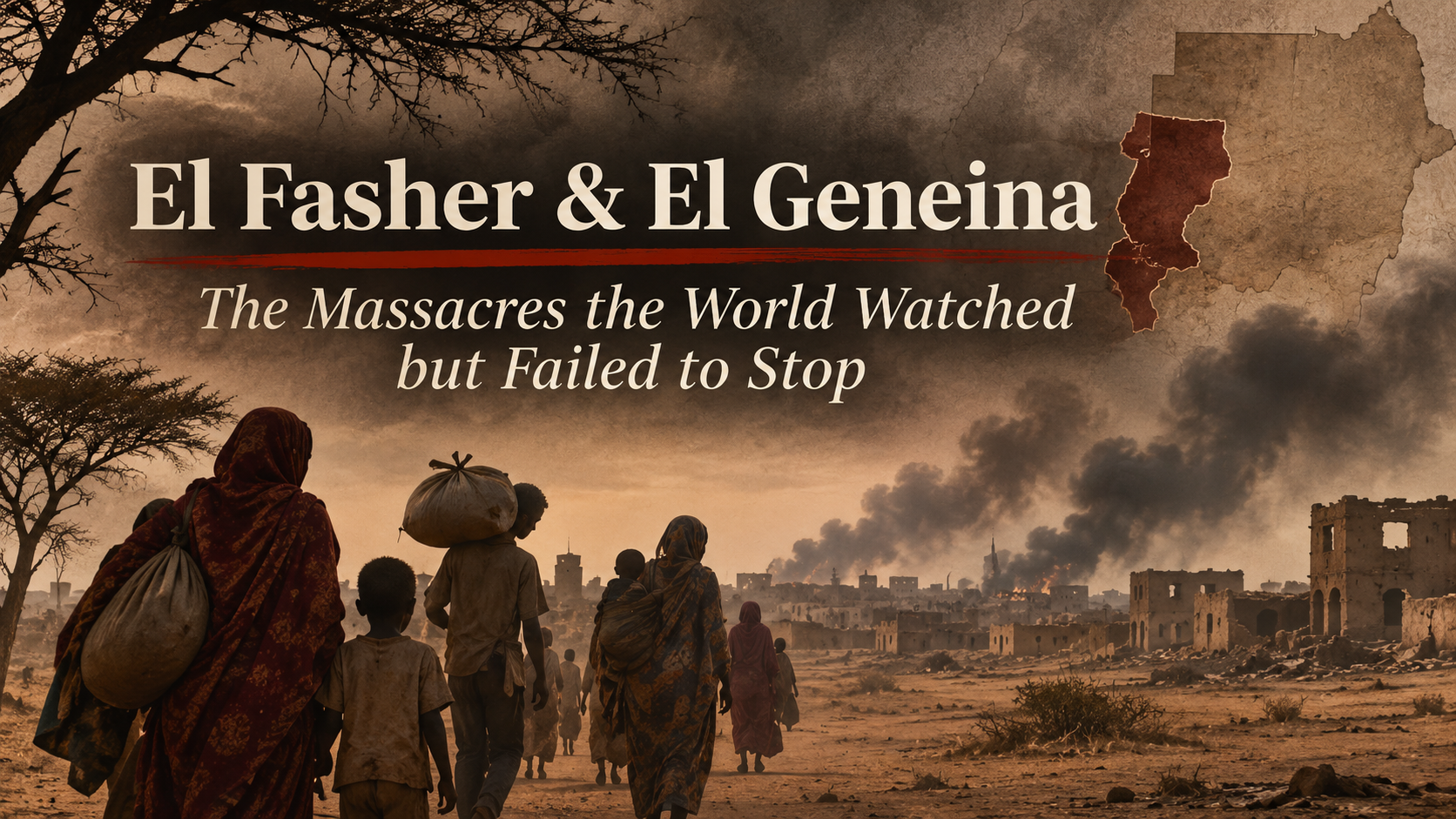
A Catastrophe That Was Foreseen
El Fasher did not fall into violence without warning.
For approximately 18 months, the city endured a devastating siege imposed by the Rapid Support Forces (RSF). Civilians faced bombardment, hunger, displacement and increasingly restricted access to humanitarian assistance.
On 13 June 2024, the United Nations Security Council adopted Resolution 2736, explicitly demanding that the RSF halt its siege of El Fasher.
The resolution demonstrated that the international community understood the danger.
Yet the siege continued.
In October 2025, the RSF captured the city. What followed was an extraordinary wave of violence against civilians.
A February 2026 report by the UN Human Rights Office documented more than 6,000 killings during the first three days of the final offensive, based on survivor and witness testimony. The UN warned that the actual death toll was undoubtedly significantly higher.
The Independent International Fact-Finding Mission for Sudan subsequently reported evidence of mass killings, sexual violence, torture, enforced disappearances and ethnically targeted persecution, particularly against the Zaghawa and Fur communities.
Its findings identified the hallmarks of genocide.
These were not merely accusations circulating on social media. They were findings documented by international investigators using witness accounts, satellite imagery and other corroborating evidence.
The warning signs had existed long before the final assault. The subsequent investigations confirmed the scale of a catastrophe the international community had been repeatedly warned could occur.
When Evidence Becomes a Substitute for Action
One of the most disturbing aspects of El Fasher is the extraordinary amount of information available about the violence.
Satellite imagery from Yale University's Humanitarian Research Lab documented developments on the ground, including evidence consistent with widespread killings and subsequent efforts to conceal human remains.
Human rights organisations documented abuses. Humanitarian agencies warned of civilian suffering. International officials issued statements, and the Security Council debated the situation.
Yet evidence alone did not stop the perpetrators.
This reveals a dangerous weakness in the international system.
We have developed remarkable capabilities to observe atrocities, but have not demonstrated an equally effective collective ability to prevent them.
The world can investigate a massacre, reconstruct its timeline, identify its victims and publish comprehensive reports. But none of these achievements can restore the lives of those who might have been protected.
Documentation is essential for justice. However, when documentation is not accompanied by timely preventive action, the international community risks becoming a sophisticated observer of human suffering rather than an effective protector of human life.
The Failure Was Not a Lack of Knowledge
It would be misleading to suggest that no international action occurred. There were diplomatic initiatives, humanitarian operations, Security Council resolutions and efforts to investigate abuses.
Many humanitarian workers and Sudanese volunteers also placed their own lives at risk to help civilians.
Their contributions deserve recognition.
But the central question remains: why did these efforts fail to produce sufficient protection?
Part of the answer lies in the structure of international decision-making.
The United Nations can document atrocities and demand action, but enforcement frequently depends on the political agreement and cooperation of sovereign states.
Strategic interests, competing diplomatic priorities, external military support, disagreements over intervention and the limitations of existing enforcement mechanisms can prevent warnings from becoming effective protective measures.
The UN Fact-Finding Mission's September 2026 investigation also documented how foreign recruitment and external support networks have helped sustain Sudan's conflict.
This raises an additional and deeply troubling question.
How can the international community claim to be seeking peace while networks operating across international borders continue enabling the means of war?
Responsibility must extend beyond those directly carrying out atrocities to include individuals and entities that knowingly facilitate serious international crimes.
The Dangerous Normalisation of African Suffering
El Fasher also forces us to confront the unequal political attention given to human suffering.
The international community is capable of extraordinary diplomatic mobilisation when conflicts threaten major geopolitical interests.
But when civilians are trapped in prolonged conflicts in parts of Africa, international responses can become dominated by humanitarian appeals, expressions of concern and calls for restraint.
Humanitarian assistance is indispensable. Yet feeding survivors is not the same as preventing their families from being killed.
Sudanese lives must not be measured by their geopolitical significance.
The protection of civilians should not depend on the economic importance of their country, the influence of their government or their proximity to powerful states.
If international law is universal, its protection must be universal.
Otherwise, the principles of human rights risk becoming conditional promises, applied with different levels of urgency according to geography and political interest.
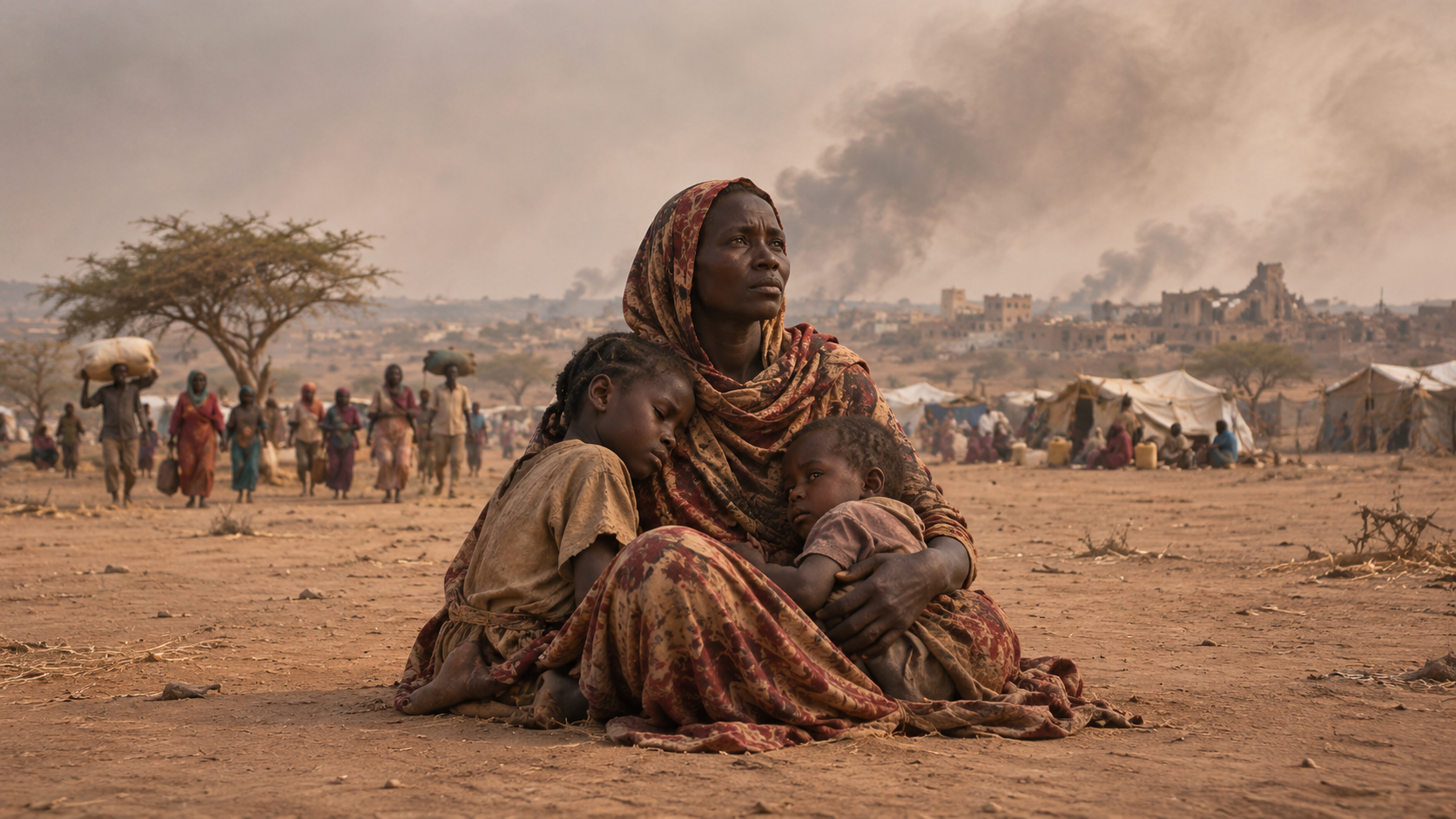
From Responsibility to Protect to Responsibility to Act
The international community endorsed the Responsibility to Protect principle in 2005, recognising that states have a responsibility to protect populations from genocide, war crimes, ethnic cleansing and crimes against humanity, and that collective international action may be necessary when national authorities manifestly fail.
El Fasher demonstrates the distance between accepting this principle and implementing effective protection.
Preventing future atrocities requires more than another declaration.
Malak Foundation believes the international community should pursue five practical priorities:
Act on credible early warnings. Where independent evidence establishes an imminent risk of mass atrocities, governments and international institutions should establish time-bound preventive measures rather than allowing repeated warnings to become routine statements.
Disrupt the networks sustaining atrocities. Strengthen enforcement of applicable arms restrictions, investigate supply chains and impose lawful, targeted measures against those responsible for facilitating serious violations.
Protect civilians and humanitarian access. Pursue verifiable arrangements that allow civilians to escape violence, enable independent humanitarian access and prevent starvation and displacement from being used as weapons of war.
Ensure accountability reaches beyond direct perpetrators. Support independent investigations, evidence preservation, appropriate international criminal proceedings and accountability for those who knowingly assist crimes.
Demand institutional accountability. International organisations and member states should examine why known warnings failed to produce effective protection, including what decisions were taken, what options were rejected and what institutional reforms are necessary.
These measures will not eliminate every future atrocity. But they would move the international system closer to its fundamental purpose: preventing the loss of human life rather than merely recording it.
El Fasher Must Not Become Another Historical Footnote
For the people of Darfur, the events in El Fasher are not simply an international policy failure.
They represent families destroyed, communities displaced, children deprived of their future and generations carrying the consequences of violence.
Those who survived deserve protection, justice and the opportunity to rebuild their lives.
Those who were killed deserve more than remembrance.
The world must also recognise that Sudan's tragedy cannot be resolved through accountability for one episode alone. The wider conflict requires sustained diplomatic pressure, civilian protection, humanitarian access, an end to external support for atrocities and a credible political pathway towards peace.
At Malak Foundation, our commitment to human dignity, anti-racism, positive peace and international advocacy is grounded in a fundamental belief: every human life carries equal value.
Positive peace requires institutions capable of preventing violence, addressing injustice and protecting human dignity. It cannot exist where mass atrocities are repeatedly documented but insufficiently confronted.
The international community must therefore examine not only what happened in El Fasher, but why its own warnings, knowledge and institutional mechanisms were unable to prevent it.
History will not judge the international community solely by the accuracy of its reports, the number of resolutions it adopted or the strength of its condemnations.
It will also judge whether it acted when lives could still be saved.
El Fasher leaves us with a question that cannot be answered by another report alone:
If the world knew what was coming, why were the people of El Fasher left without effective protection?
And more importantly, what will the world do differently before the next El Fasher?
Malak Foundation Incorporated is an Australian community organisation committed to human dignity, anti-racism, community development, positive peace and international engagement. Through advocacy, partnerships and community initiatives, the Foundation supports inclusive societies and the protection of vulnerable communities.
This article reflects Malak Foundation's advocacy position, informed by publicly available United Nations findings and independent investigations.
