Heartbreak Becomes Violence
When Heartbreak Becomes Something More
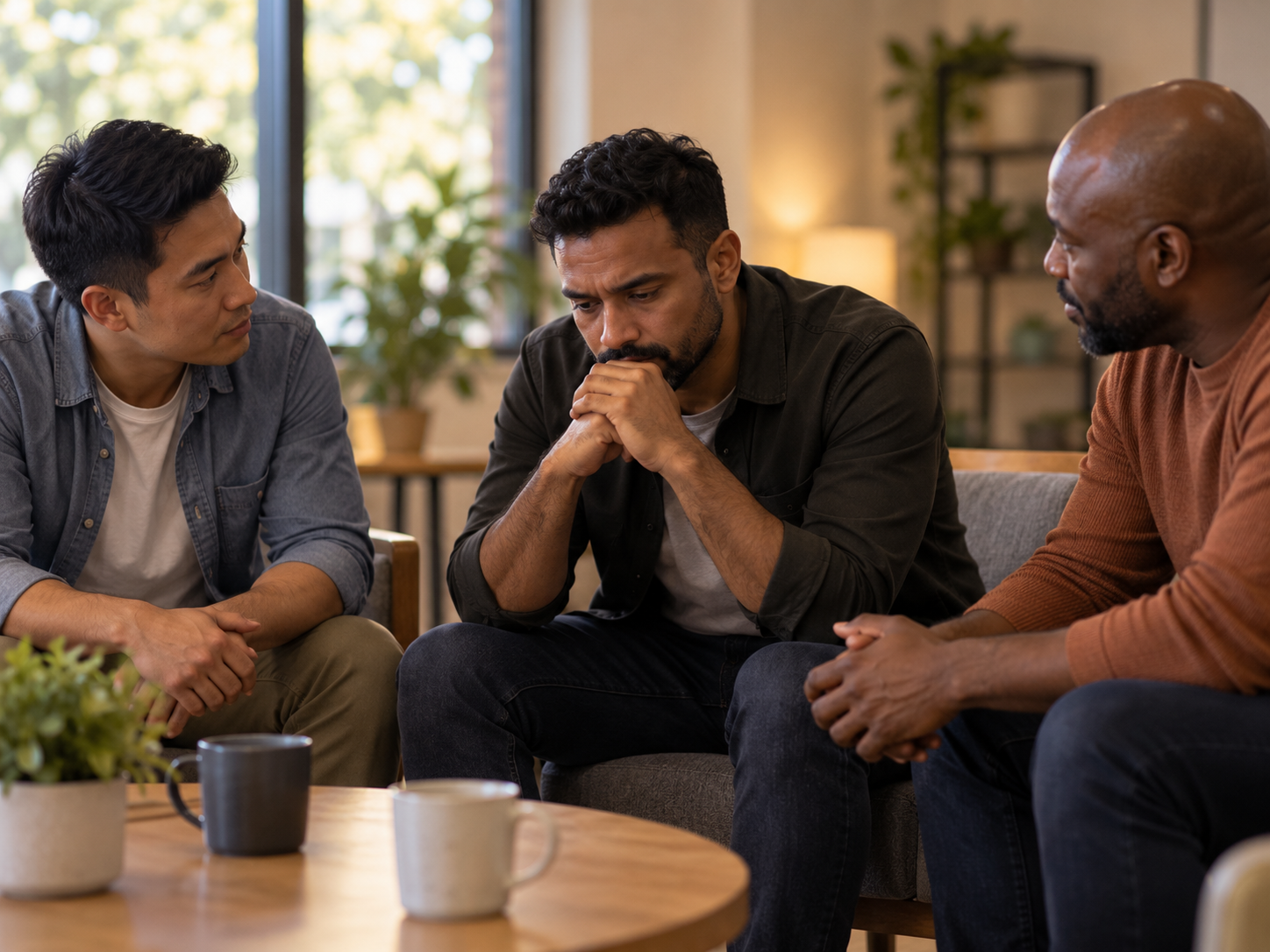
A conversation with men about relationships, loss and violence
Most relationships do not begin with anger.
They begin with attraction, conversation, excitement and hope.
Two people meet. They enjoy each other's company. They spend more time together. One person may become emotionally invested more quickly than the other.
Money may be spent. Families may become involved. Thoughts about marriage or a future together may begin.
Then something changes.
Perhaps one person discovers that the other has been seeing somebody else.
Perhaps the relationship ends unexpectedly.
Perhaps one person wants to continue while the other has already decided to move on.
What follows can be painful.
For most people, that pain eventually becomes part of the past.
But sometimes it does not.
Sometimes heartbreak slowly becomes jealousy. Jealousy becomes monitoring. Monitoring becomes control. And in some situations, control can develop into stalking, threats or violence.
This article is about recognising that change before somebody gets hurt.
It is written particularly for men, their friends, their families and the communities around them.
Not because every man who experiences heartbreak is dangerous.
Most are not.
But if we want to prevent violence against women and children, we cannot only talk about what happens after violence.
We also need to talk about the person whose behaviour may be moving towards it.
It Can Begin With a Relationship That Means Different Things to Two People
Imagine two people dating.
For one person, the relationship has already become serious.
They are thinking about the future.
They are helping financially.
They are making sacrifices.
They are emotionally committed.
The other person may enjoy the relationship but still see it as something new.
They may simply think:
“We are still getting to know each other.”
Neither person may have clearly discussed what the relationship actually is.
Then one discovers the other has been talking to or seeing somebody else.
The reaction may be immediate:
“I have been betrayed.”
That feeling can be extremely painful.
Perhaps the relationship continues.
Perhaps there is an apology.
Perhaps the person decides to forgive.
But forgiveness does not always mean trust has returned.
The questions start appearing.
“Where were you?”
“Who were you talking to?”
“Why did you not answer?”
“Who is that person?”
At first, it may look like insecurity.
But there is an important difference between feeling jealous and trying to control another person's life.
Jealousy is a feeling. Control is a behaviour.
What if He Really Was Treated Badly?
This is where the conversation becomes uncomfortable.
Sometimes he was.
He may have been lied to.
He may have been cheated on.
He may have spent significant amounts of money supporting the relationship.
He may genuinely feel that someone took advantage of his generosity.
Acknowledging that does not excuse what happens next.
Two things can be true at the same time.
A person may have been badly treated.
And that same person may later behave badly towards somebody else.
If someone cheated on you, it does not give you a right to follow them.
If somebody used your money, it does not give you a right to frighten them.
If someone embarrassed you, it does not give you a right to threaten them.
And if somebody no longer wants a relationship with you, love does not create a right to make them stay.
The danger begins when:
“She hurt me.”
slowly becomes:
“She destroyed my life.”
and eventually:
“After what she did, she deserves this.”
Pain may explain anger.
It does not give anyone permission to cause harm.
“She Destroyed My Life — But I Would Take Her Back Tomorrow”
This can seem contradictory.
A man may describe a former partner as the cause of everything that has gone wrong.
He may say:
“She used me.”
“She humiliated me.”
“She cheated on me.”
“She ruined my life.”
Then, in the same conversation:
“If she came back, I would forgive everything.”
Why?
Because getting the relationship back can begin to represent much more than getting one person back.
It may feel like getting dignity back.
Making the money and sacrifices mean something again.
Ending the loneliness.
Proving to family and friends that the relationship was not a failure.
Undoing rejection.
The former partner becomes both the person blamed for causing the pain and the person imagined as the only person capable of ending it.
The person who is blamed for causing the pain can also become the person imagined as the only one who can take that pain away.
That can create a powerful emotional dependency.
And it can keep somebody trapped in a relationship that has already ended.
Loneliness Can Quietly Keep the Relationship Alive
For many men, particularly those from migrant and multicultural communities, loneliness deserves much more attention.
A person may have moved to Australia without parents, siblings or lifelong friends.
Their support network may be small.
They may work long hours.
They may feel uncomfortable talking about personal problems.
Their partner may gradually become the main person in their life.
Then the relationship disappears.
Suddenly the evenings feel longer.
The phone becomes quieter.
Weekends become difficult.
And instead of slowly rebuilding life, the person starts checking.
Facebook.
Instagram.
WhatsApp.
TikTok.
Perhaps they have been blocked, so they ask a friend or relative to check.
At first the explanation sounds harmless:
“I just want to know how she is.”
Then there is a photograph with somebody else.
A comment.
A dinner.
A new relationship.
Suddenly the pain starts again.
The pattern becomes:
I feel lonely, so I check.
I check and see something that hurts me.
I become angry.
I feel betrayed again.
So I check again.
The person believes they are searching for answers.
But every search keeps the relationship active inside their mind.
Eventually, the former partner may have moved on completely while the other person is still emotionally living inside the breakup.
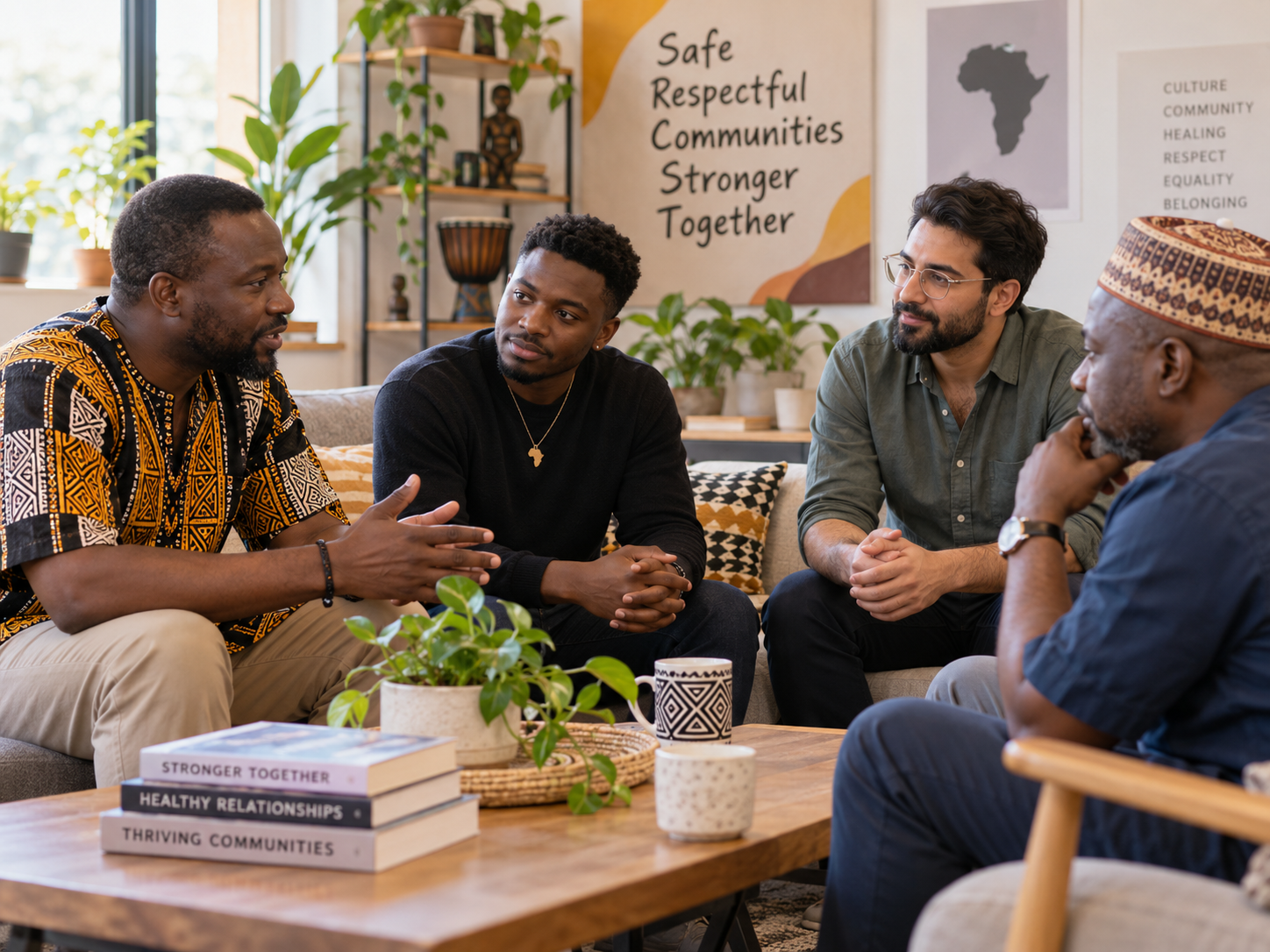
In Multicultural Communities, the Loss Can Feel Bigger Than the Relationship
Relationships often involve more than two people.
Families may know one another.
Marriage may already have been discussed.
People in the community may know about the relationship.
Financial commitments may have been made.
Religion, family expectations and reputation may also be involved.
So when the relationship ends, the pain can become public.
A man may begin thinking:
“What will my family think?”
“What will people say?”
“Everyone knows she left me.”
“Another man has replaced me.”
Sometimes shame becomes more painful than the breakup itself.
This is where communities need to be careful.
A relationship ending does not make somebody less of a man.
A woman choosing to leave does not remove a man's dignity.
Being cheated on does not make somebody weak.
Divorce does not make somebody a failure.
Violence does not restore honour.
No family reputation is repaired by an assault.
No dignity is restored by stalking.
No respect is gained by threatening somebody who has decided to leave.
One moment of anger can instead cost someone their freedom, career, relationship with their children, community standing and, in the most serious cases, another person's life.
Then Somebody New Enters the Picture
A former partner beginning another relationship can be particularly difficult.
Now the loss has a face.
The thinking may become:
“Who is he?”
“What does he have that I don't?”
“Why is she happy while I am suffering?”
“That should have been my life.”
The new partner may suddenly become an enemy, even though they played no part in the original breakup.
This is an important moment.
Do not investigate the new person.
Do not search for where they work.
Do not ask friends for information.
Do not follow them.
Do not confront them.
The new partner is not responsible for healing the previous relationship.
And the former partner is not responsible for repairing somebody else's sense of rejection.
Friends Can Help — or Unknowingly Make Things Worse
Imagine a friend calls and says:
“She blocked me. Can you check her Facebook for me?”
It may seem harmless.
You check.
You send a screenshot.
The next day there is another request.
Then another.
Soon you know far more about the former partner's life than you ever wanted to know.
At some point, helping your friend can turn into helping your friend remain obsessed.
A better response may be:
“I know you are hurting, but I am not going to help you monitor her.”
You can still support him.
Have coffee.
Go for a walk.
Go to the gym.
Play sport.
Spend an evening together.
Listen to what he is actually feeling.
Encourage him to speak to somebody professionally.
Support the man. Do not support the behaviour.
That distinction can matter enormously.
Families Also Need to Know When to Stop Trying to Repair the Relationship
In many cultures, when a relationship is in difficulty, families become involved.
Often this can be helpful.
Parents, elders and relatives can calm disagreements and provide perspective.
But not every relationship should be put back together.
If somebody has clearly said:
“I do not want this relationship anymore,”
that decision must eventually be respected.
A mother repeatedly calling the former partner may not help.
An uncle contacting her family may not help.
Relatives arranging another meeting may not help.
And if there has already been stalking, violence, serious threats or an intervention order, the situation has moved beyond an ordinary family disagreement.
At that point, safety matters more than reconciliation.
Community and Faith Leaders Have an Important Role
In multicultural communities, many people will speak to a trusted leader before they ever contact a counsellor.
That person might be an imam, priest, pastor, elder, community leader or respected relative.
Their words can carry enormous weight.
A man may ignore everyone else and still listen when someone he respects tells him:
“I understand that you are hurting, but this behaviour must stop.”
A trusted person can acknowledge the pain without agreeing with the behaviour.
They can say:
“You may have been treated unfairly. But you are responsible for what you do now.”
And sometimes they can help a person accept the hardest reality:
The relationship is finished.
Professional support should not be seen as a rejection of culture, family or faith.
Sometimes community support and professional support need to work together.
Being Blocked Means Stop
Someone blocks your phone number.
You create another account.
They block that.
You ask a friend to send a message.
They refuse to answer.
You contact a relative.
You go to their workplace because you believe that if you can only speak face-to-face, everything will make sense.
From your perspective, you may think:
“I only want one final conversation.”
From the other person's perspective, it may feel frightening.
If someone has clearly asked for no contact, continuing to find new ways to reach them is no longer simply persistence.
It can become stalking.
Sometimes you will never receive the explanation you want.
Sometimes closure has to happen without the other person's participation.
It may feel unfair.
It still has to be accepted.
When “Joking” Should Concern Us
People sometimes hide serious thoughts inside humour.
A man might say:
“Maybe I should kill both of them.”
Then laugh.
Or:
“If I can't have her, nobody will.”
Then say:
“I'm only joking.”
A single dark comment does not tell us what somebody will do.
Context matters.
Has he previously been violent?
Is he following her?
Is he constantly monitoring her?
Is he obsessed with the new partner?
Is his anger increasing?
Is he saying there is nothing left to live for?
Is he talking about weapons?
Is he talking about killing himself as well?
When several warning signs begin appearing together, friends and family should not simply laugh them away.
You do not have to predict whether somebody will become violent. You only have to recognise that they may need help now.
Men Also Need Permission to Say: “I Am Not Coping”
Many men grow up hearing versions of the same message:
Be strong.
Do not cry.
Do not talk about your problems.
Handle it yourself.
So when a relationship collapses, sadness sometimes has nowhere to go.
Neither does fear.
Or shame.
Or loneliness.
Or rejection.
Anger becomes the emotion everybody can see.
But underneath anger may be somebody who is frightened that his life has lost its meaning.
We need to make it normal for men to say:
“I am not coping with this.”
There is nothing weak about that sentence.
It may be one of the most responsible things somebody says.
If You Are Recognising Yourself in This Article
Perhaps you have reached this point and thought:
“Some of this sounds familiar.”
That does not mean anybody is calling you a violent person.
It means there may still be an opportunity to change what happens next.
You can acknowledge that somebody hurt you.
You can acknowledge that you still love them.
You can even acknowledge that part of you wishes they would come back.
But you also need to accept what you cannot control.
You cannot make somebody love you.
You cannot make somebody return.
You cannot decide who they date.
You cannot force somebody to give you closure.
What you can control is your own behaviour.
Stop checking their accounts.
Stop asking friends for information.
Stop driving past.
Stop contacting them if they have asked you not to.
If an intervention order is in place, follow it completely.
And then do something that can feel much harder:
Start building a life that does not involve them.
Return to sport.
Reconnect with friends.
Visit family.
Volunteer.
Study.
Work.
Spend time in your community.
Speak to somebody you trust.
Get professional support.
The goal is not to pretend that the relationship meant nothing.
The goal is to reach a point where your future no longer depends on whether that person comes back.
Your Relationship Ended. Your Life Did Not.
This may be the most important message in this article.
A relationship can end badly.
Somebody may have betrayed you.
You may have lost money.
You may feel embarrassed.
You may feel deeply alone.
You may believe the future you planned has disappeared.
But your life has not ended.
A year from now, your circumstances can look very different.
People will move on.
Families will move on.
Communities will move on.
You can move on too.
Do not exchange one painful period of your life for one decision that changes every remaining year.
If the Thoughts Are Becoming Dangerous, Speak Before You Act
If your thoughts have reached:
“I want to hurt her.”
“I want to hurt the new partner.”
“If I cannot have her, nobody can.”
“I could kill someone.”
or
“There is nothing left for me.”
do not keep those thoughts to yourself.
Do not go to the person's home.
Do not arrange a confrontation.
Do not carry a weapon.
Do not drink or use drugs and then contact them.
Tell somebody exactly what you are thinking.
If somebody is in immediate danger, call 000.
Support is available
Men's Referral Service
For men concerned about their own behaviour, and friends or relatives worried about someone using violence.
1300 766 491
1800RESPECT
24-hour domestic, family and sexual violence information and support.
1800 737 732
Text: 0458 737 732
Safe Steps Victoria
24/7 family violence crisis support.
1800 015 188
Lifeline
24/7 crisis and suicide-prevention support.
13 11 14
TIS National
Interpreter assistance for people who would prefer to communicate in another language.
131 450
The Conversation Needs to Happen Before the Tragedy
Our communities often respond extremely well after tragedy.
We visit families.
We bring food.
We raise money.
We attend funerals.
We comfort children.
We pray.
And we ask:
“How did it ever reach this point?”
Sometimes there were warning signs long before the final incident.
A relationship ended.
Heartbreak became obsession.
Obsession became monitoring.
Monitoring became stalking.
Humiliation became grievance.
Grievance became revenge.
That progression is not inevitable.
There are many moments where it can be interrupted.
A friend can refuse to help monitor an ex-partner.
A father can listen instead of telling his son to simply “be strong”.
A relative can take a threat seriously instead of laughing.
A community leader can explain that violence is not honour.
And a man himself can say:
“I need help.”
Preventing family violence is not only about helping somebody after violence happens.
Sometimes prevention begins much earlier.
It begins when somebody recognises:
“This pain is starting to control me, and I need help before I do something I cannot undo.”
That is not weakness.
That is taking responsibility.
And it may protect not only the woman and children around him, but his own future as well.
Malak Foundation recognises that family violence can affect people of all genders and backgrounds. This article speaks particularly to men as part of a broader conversation about preventing violence against women and children. It provides general community information and does not replace professional advice or an individual risk assessment.
