Why Everyday Care Matters

Mental Health in Our Communities and Workplaces
Mental health is no longer an issue that affects “some people.”
It affects all of us—in our families, workplaces, schools, and communities.
In Australia, one in five people will experience a mental health condition in any given year. Over a lifetime, that number rises to more than 40% of the population. This means that mental health challenges are not the exception—they are part of everyday life.
While awareness has improved, the real-world impacts of mental ill-health remain severe and often underestimated.
When Mental Health Is Left Unsupported
Mental health challenges do not exist in isolation. When support is delayed or absent, the effects can ripple across every part of a person’s life, including:
Family breakdown and divorce
Physical health conditions such as heart disease and chronic illness
Substance misuse is often used as a coping mechanism
Social withdrawal and isolation
Reduced work or study performance
Increased risk of suicide
Research shows that people experiencing serious mental illness can have a life expectancy 10–20 years shorter than the general population, largely due to preventable physical health conditions and lack of integrated care.
Loneliness: A Growing Crisis
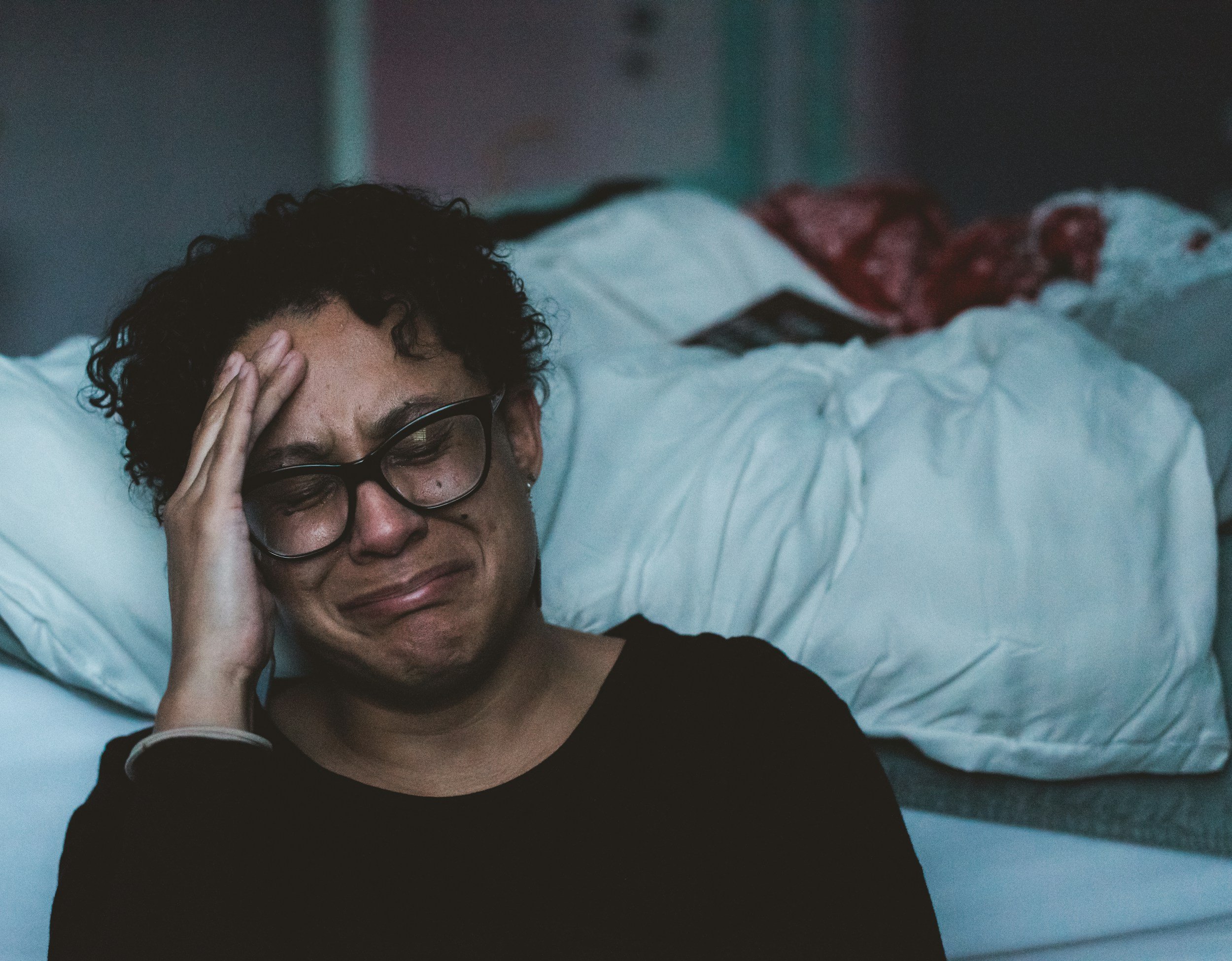
Loneliness has become one of the most pressing social challenges of our time.
In Australia:
1 in 6 people report feeling lonely often or always
1 in 3 Australians experience loneliness at least some of the time
Young adults are the most affected age group
For people from multicultural and migrant backgrounds, the risk is even higher. Language barriers, separation from family, cultural stigma, and limited access to culturally appropriate services all increase vulnerability to isolation.
Loneliness is not just emotional—it is dangerous. People who experience chronic loneliness are:
4 times more likely to suffer depression
4 times more likely to have a chronic physical illness
At a higher risk of early death

Mental Health at Work and in Education
Our workplaces and learning environments are often where mental health struggles first appear.
In Australian workplaces:
Over 70% of workers report job-related stress
Nearly half of employees with a mental health condition say work contributed to it
Mental ill-health costs the Australian economy hundreds of billions of dollars each year in lost productivity and healthcare costs
In education:
Around 1 in 4 young Australians experience high psychological distress
Among university students, more than 40% report mental health or wellbeing challenges
Over half of the students who are struggling are not receiving professional support
These figures make one thing clear: mental health support must be proactive, not reactive.
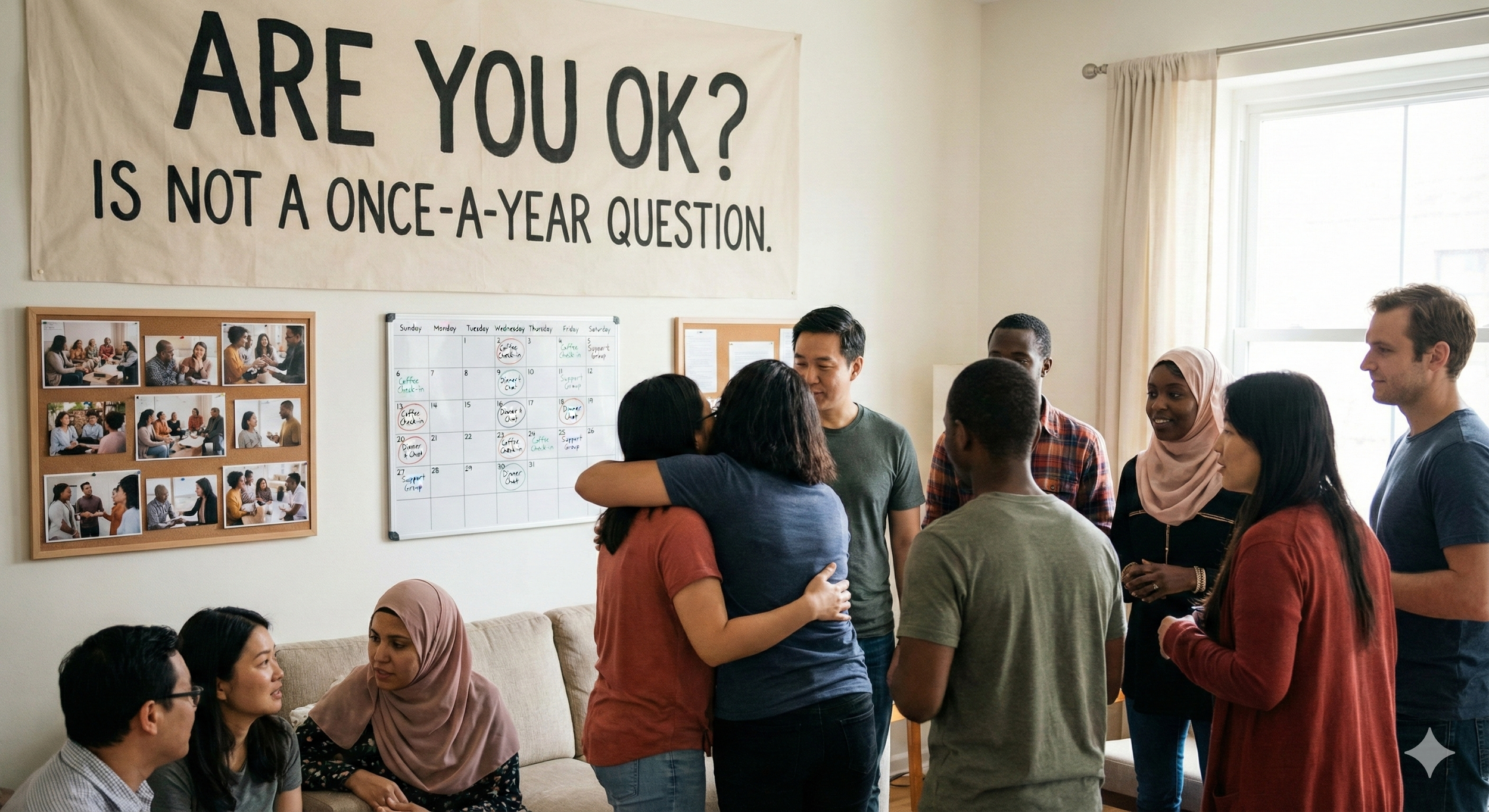
“Are You OK?” Is Not a Once-a-Year Question
Asking “Are you OK?” can save lives—but only if it is asked consistently and genuinely.
Mental health check-ins should not be limited to one awareness day each year. They should be part of our daily culture:
At work
In classrooms
At home
In our communities
Often, people do not need solutions. They need:
To be noticed
To be listened to
To be taken seriously
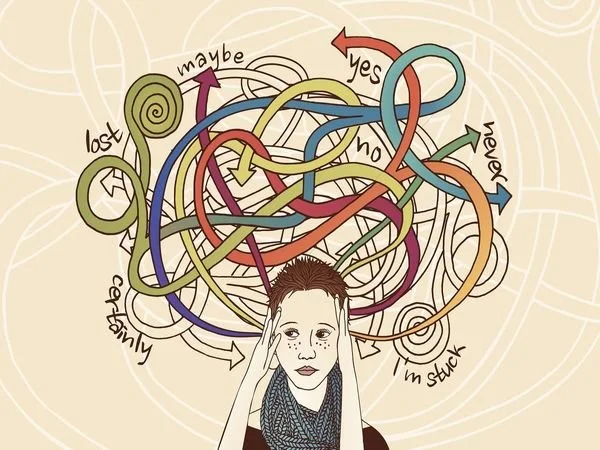
What You Can Do—Starting Today
To support yourself:
Pay attention to changes in your mood, energy, or behaviour
Seek support early—from trusted people or professionals
Stay connected, even when it feels difficult
To support others:
Notice changes and gently check in
Listen without judgment or rushing to “fix”
Encourage professional help when needed
Keep asking, even if the first answer is “I’m fine”
Small actions, repeated consistently, make a powerful difference.
A Shared Responsibility
Mental health is not just a personal issue—it is a community responsibility.
At the Malak Foundation, we believe strong communities are built on care, inclusion, and connection. By embedding mental wellbeing into everyday life—across cultures, workplaces, and generations—we can reduce isolation, strengthen resilience, and ensure no one feels they have to struggle alone.
Sometimes, the most powerful support starts with a simple question—asked today, and asked again tomorrow.
